
 HarvestWise
If you have been planning to upgrade tools, equipment, or technology, the $20,000 instant asset write-off for 2025-26 can make the tax outcome simpler and faster. The extension means many eligible small businesses can claim an immediate deduction for the business portion of eligible assets under the threshold, rather than depreciating them over time.
What the extension means (in plain English)
For the 2025-26 income year, eligible small businesses can potentially claim an upfront deduction for each eligible depreciating asset that costs less than $20,000. This is a per-asset threshold, so multiple purchases can qualify as long as each asset is under the limit and the rules are met.
Who may be eligible
Eligibility depends on your circumstances. The instant asset write-off is commonly relevant for small business entities that meet turnover requirements and use simplified depreciation. If you are unsure whether your structure or accounting method is eligible, confirm before committing to purchases.
What kinds of purchases can qualify
Common examples include tools and equipment, computers and laptops, point-of-sale devices, office fit-out items, and business software or hardware that is treated as a depreciating asset. The key is that it must be a depreciating asset used for a taxable purpose, and the cost per asset must be under $20,000.
The timing rule that catches people at EOFY
The deduction is generally linked to when the asset is first used or installed ready for use for a taxable purpose. This is why late-June purchases can be risky if delivery, setup, or installation slips into July. If you are buying close to year end, plan the logistics so the asset is ready for use by the deadline.
Business use vs private use
If an asset is used partly for private purposes (for example, a phone or laptop), you generally claim only the business portion. Clean documentation makes this easy: keep the invoice, record the business-use percentage, and apply the same logic consistently.
Do not overlook upgrades and improvements
In some cases, amounts you spend after purchase to improve or upgrade an asset can also matter for depreciation calculations. If you are upgrading an existing asset (rather than buying a new one), ask before you assume it is treated the same as a new asset purchase.
A practical pre-purchase checklist
- Confirm your business is eligible and the asset is eligible
- Confirm the cost per asset is under $20,000 (and document what is included in that cost)
- Confirm it will be first used or installed ready for use by the deadline
- Keep the tax invoice, proof of payment, and delivery/installation evidence if relevant
- Document the business-use percentage for mixed-use assets
- Ensure the purchase is coded correctly in your bookkeeping file (including GST treatment)
Common mistakes that trigger cleanups (or disputes)
- Buying personally and claiming through the business without clear documentation
- Claiming 100% business use when there is mixed private use
- Missing invoices, unclear descriptions, or mismatches between the invoice and the asset register
- Leaving reconciliation and coding until BAS week or year end, which causes avoidable rework
A simple planning tip for better cash flow
Tax deductions are helpful, but they do not replace cash flow planning. If you are making multiple purchases, consider how the outlay affects your GST and working capital, then plan your set-aside amounts so BAS and supplier payments stay comfortable.
How HarvestWise Accounting can help
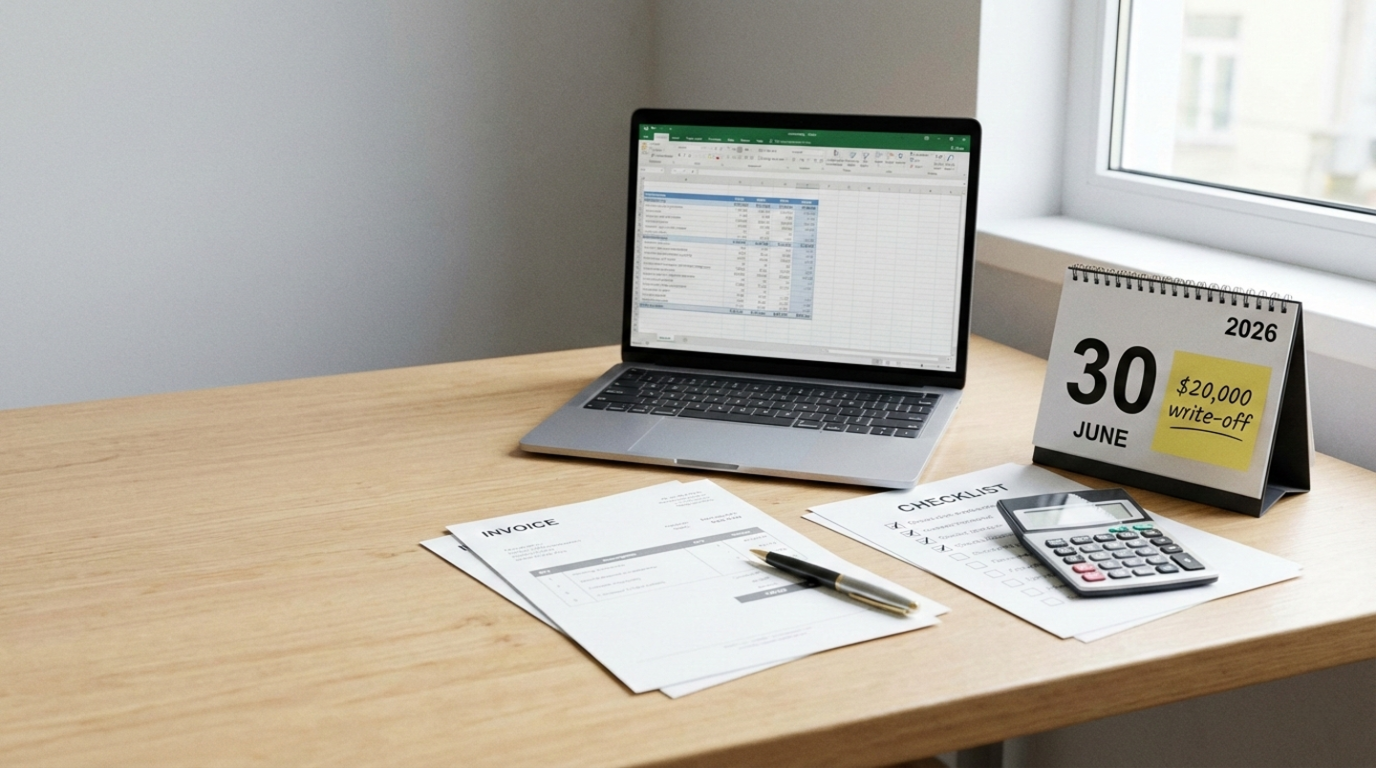
If you are planning purchases before 30 June 2026, we can confirm eligibility, review timing, and set up clean documentation so the claim is straightforward. We can also help you build a simple monthly close process so EOFY does not become a scramble.
Disclaimer
General information only. Tax outcomes depend on your circumstances; speak to a registered tax professional for advice.