
 John Jevi dela Cruz
ATO interest charges now matter even more. From 1 July 2025, many taxpayers can no longer deduct general interest charge and shortfall interest charge incurred on or after that date. That means tax debt can hurt cash flow more than it did before.
This issue is wider than many people expect. It can affect individuals, families, sole traders, trusts, companies, and larger businesses. So, now is a good time to review any unpaid ATO debt before a small issue becomes a costly one.
Why ATO interest charges matter more after 1 July 2025
The big change is simple. If you incur GIC or SIC on or after 1 July 2025, you generally cannot claim it as a tax deduction. Before that date, many taxpayers could deduct those charges.
As a result, the real after-tax cost of carrying ATO debt is now higher. Therefore, late lodgment, overdue tax, and amended assessments can create more pressure on your cash flow than they did in the past.
If you want the official wording, see the ATO’s update on denying deductions for ATO interest charges.
What counts as ATO interest charges
When people talk about ATO interest charges, they usually mean two main charges: GIC and SIC. While the names sound technical, the difference is fairly practical.
GIC usually applies when a tax liability stays unpaid after the due date. SIC may apply when your assessment is amended and the tax payable increases. In other words, one often relates to late payment, while the other can arise after a tax shortfall comes to light.
You can read the ATO’s general explanation on interest charged by the ATO.
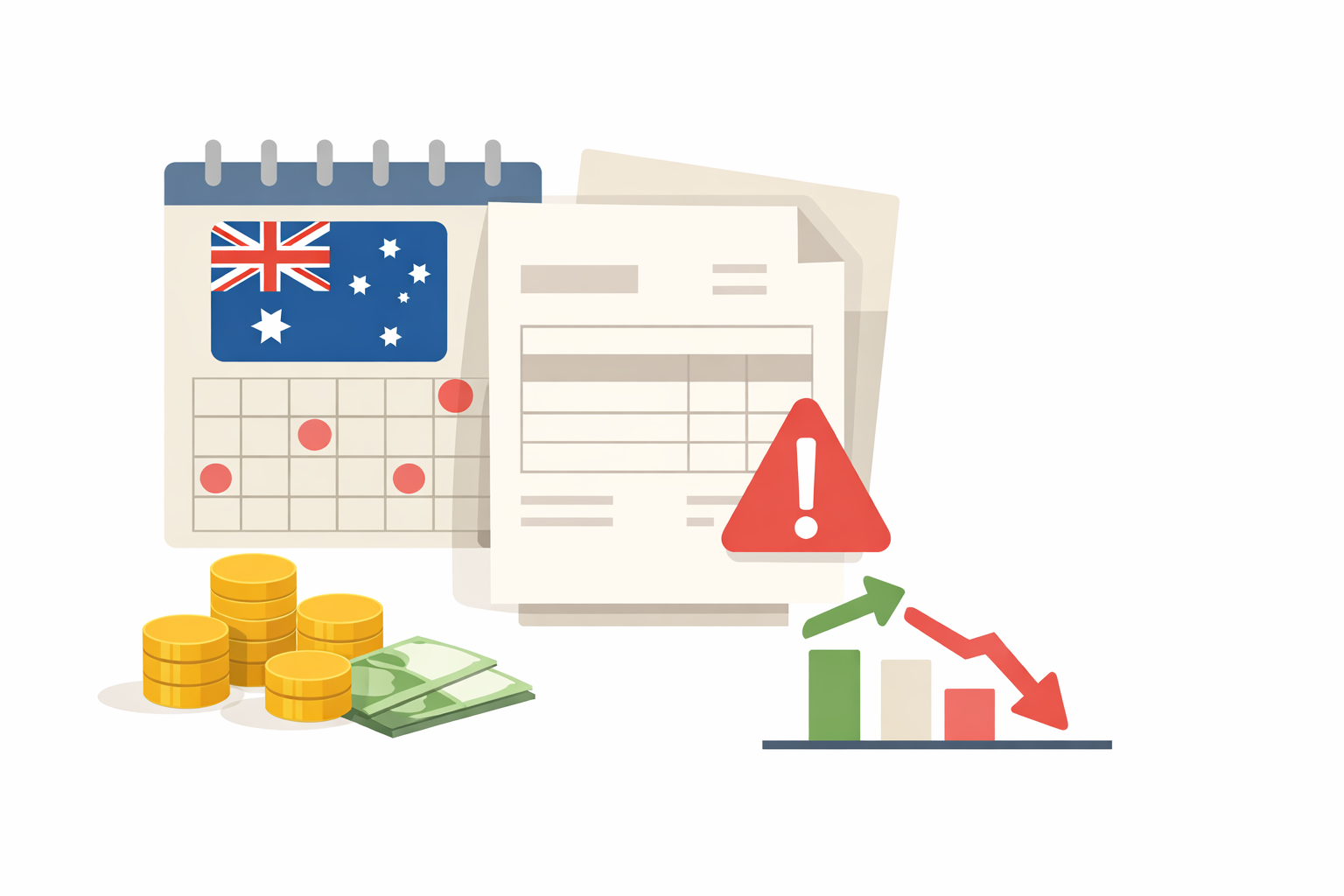
[IMAGE: harvestwise-blog-01-ato-interest-charges-featured.webp — ATO interest charges concept showing tax debt, due dates, and cash flow pressure]
7 costly ATO interest charges mistakes to avoid
1. Assuming the old deduction still applies
This is the biggest trap. Many taxpayers still assume ATO interest charges work the old way.
However, the rule changed from 1 July 2025 for new GIC and SIC. So, if you rely on an old assumption, you may understate the real cost of the debt.
2. Treating tax debt like a future problem
Tax debt rarely stays still. It can grow while you focus on other priorities.
Because of that, delay often makes the final cost worse. What looks manageable today can become a larger cash flow issue later.
3. Waiting too long to ask for help
Early action usually gives you more options. You have more room to fix lodgments, improve records, and review repayment choices before the pressure builds.
By contrast, last-minute action often leads to rushed decisions. It can also leave you dealing with poor records at the exact moment you need clarity.
4. Ignoring amended assessments
An amended assessment is not just an admin update. It can also create a new cost issue.
If your amended assessment increases the tax payable, SIC may apply. So, it is important to review amended notices quickly and understand the full impact, not just the extra tax amount.
5. Assuming a payment plan fixes everything
A payment plan can help, but it is not a complete strategy on its own. You still need to understand how much you owe, what period the debt covers, and whether new debt is still building.
In addition, the ATO expects you to stay on top of current obligations while you are on a plan. If you do not, the arrangement can become harder to manage.
For official guidance, see the ATO page on payment plans.
6. Mixing pre- and post-1 July 2025 charges
This point is easy to miss. Interest incurred before 1 July 2025 may be treated differently from interest incurred on or after that date.
That means clear records matter more than ever. If your bookkeeping is messy, it becomes much harder to separate what happened before the rule change from what happened after it.
7. Leaving the bookkeeping messy
Poor bookkeeping makes every tax problem harder. It is more difficult to confirm the debt, trace the starting point, and measure how much interest has built up.
As a result, you lose speed and clarity when you need both. Clean records do not remove ATO interest charges, but they do help you respond faster and make better decisions.
ATO interest charges and payment plans
A payment plan can still be a smart step if you need breathing room. However, it should sit inside a broader fix, not replace one.
First, bring overdue lodgments up to date. Next, confirm which liabilities are current and which are older. Then, check whether the repayment amount is realistic for your cash flow.
This matters because a payment plan works best when it stops the problem from repeating. If new debt keeps building on top of old debt, the pressure often returns.
[IMAGE: harvestwise-blog-01-ato-interest-charges-payment-plan.webp — Payment plan illustration with instalments, calendar dates, and business cash flow]
A quick checklist for ATO interest charges
Use this review before the issue grows further:
- Confirm whether you have unpaid ATO liabilities.
- Identify whether GIC or SIC is being charged.
- Check whether the charge was incurred before or after 1 July 2025.
- Review any payment arrangement already in place.
- Update your cash flow forecast.
- Clean up overdue lodgments and reconciliations.
- Get advice before the debt becomes harder to manage.
This checklist is simple. Even so, it can save time, reduce stress, and help you avoid avoidable cost.
How HarvestWise can help with ATO interest charges
If ATO interest charges are building up, HarvestWise can help you make the situation clearer and easier to manage. First, we can review your records and help you understand what is driving the debt.
Next, we can support the clean-up work that often sits behind the problem. That may include tax return support, bookkeeping support, and practical next steps based on your current position.
If you want to speak with us, contact HarvestWise Accounting. You can also read more practical updates on our blog.
[IMAGE: harvestwise-blog-01-ato-interest-charges-checklist.webp — Checklist graphic for reviewing ATO interest charges, records, and cash flow]
Disclaimer
General information only. Tax outcomes depend on your circumstances. Speak to a registered tax professional for advice.