
 John Jevi dela Cruz
Sole trader tax deductions can reduce your tax bill. However, they can also create problems when claims are rushed.
This risk grows when business and private spending overlap. It also grows when records are thin.
The ATO expects each deduction to connect to your business. Private use must be removed. Records must also support the claim.
For more detail, see the ATO’s guide to business deductions.
Here are seven risky sole trader tax deductions errors to check before lodging.
Why sole trader tax deductions go wrong
Sole trader tax deductions often go wrong because business life and personal life mix.
One phone may handle client calls and family messages. A car may cover both client visits and private errands. Your home office may sit inside a shared living space.
None of these issues blocks a claim by itself. However, each one needs a clear business-use calculation.
Good records make claims easier to explain. By contrast, weak records make even valid expenses harder to defend.
1. Sole trader tax deductions for mixed-use costs
Many sole trader tax deductions involve mixed-use expenses.
These can include phone bills, internet, vehicles, software, home office costs, and equipment.
Do not claim the full cost when only part relates to business. Instead, claim the business portion only.
For example, your phone may be used for clients, suppliers, family calls, and personal admin. A full business claim may then be risky.
A better approach is to calculate a fair business-use percentage. Then keep notes that show your method.
Itemised bills can help. So can a short usage diary, calendar records, or another practical method.
2. Sole trader tax deductions and private spending
A business bank account does not turn private spending into a deduction.
This error often happens when sole traders use one account for everything. The payment appears in the business records. Even so, the expense still needs a business purpose.
Be careful with family meals, ordinary clothes, personal subscriptions, groceries, holidays, and household items.
The ATO recommends keeping business and private spending separate where possible. Its guide on using business money and assets for private purposes explains this risk.
Where possible, use a separate business account. That simple step can make sole trader tax deductions easier to review.
3. Sole trader tax deductions for home business costs
Home business claims need care.
You may be able to claim running expenses if you work from home. These may include power, heating, cooling, phone, internet, cleaning, and equipment decline in value.
Occupancy expenses need more caution. These can include rent, mortgage interest, council rates, land tax, or home insurance.
The key question is whether part of your home has the character of a place of business. The ATO explains this in its guide to home-based business expenses.
Check the tax impact before claiming occupancy costs. In some cases, these claims may affect capital gains tax later.
For many sole traders, running expenses are the safer focus. Still, the calculation must be clear.
4. Vehicle deduction errors
Vehicle claims are easy to overstate.
You can claim business-related car expenses. However, private travel must stay out of the claim.
A client visit may count. School drop-offs, weekend driving, private errands, and personal appointments do not.
Some sole traders use the cents per kilometre method. The ATO allows a maximum of 5,000 business kilometres per car each income year under this method. Check the current ATO guide to the cents per kilometre method.
Avoid repeating last year’s kilometres without checking actual use. Also avoid including private trips or treating ordinary commuting as business travel.
If your driving changed this year, review the method before lodging.
5. Travel deduction errors
Business travel can be deductible. However, the business purpose must be clear.
Problems start when a trip mixes business and private time. For instance, you may attend a conference and add a holiday. A family member may also travel with you.
In those cases, separate private costs from business costs.
A strong travel claim should show the destination, business reason, dates, cost, and private-use adjustment.
The ATO’s page on business travel expenses explains record rules for sole traders and partners.
If the business reason looks weak, the claim may create more risk than value.
6. Asset and GST deduction errors
Not every business purchase gets claimed in the same way.
Some items may be immediate deductions. Larger assets may need depreciation unless a small business concession applies.
This matters for laptops, phones, cameras, tools, furniture, vehicles, and equipment.
GST can also change the claim. If you are registered for GST and can claim GST credits, your income tax deduction may need to use the GST-exclusive amount.
Before claiming larger sole trader tax deductions, check the asset type, business-use percentage, GST treatment, and purchase date.
Also check whether the asset was ready for use in the income year.
For background, see the ATO’s guide to depreciating assets and capital expenses.
7. Record-keeping errors
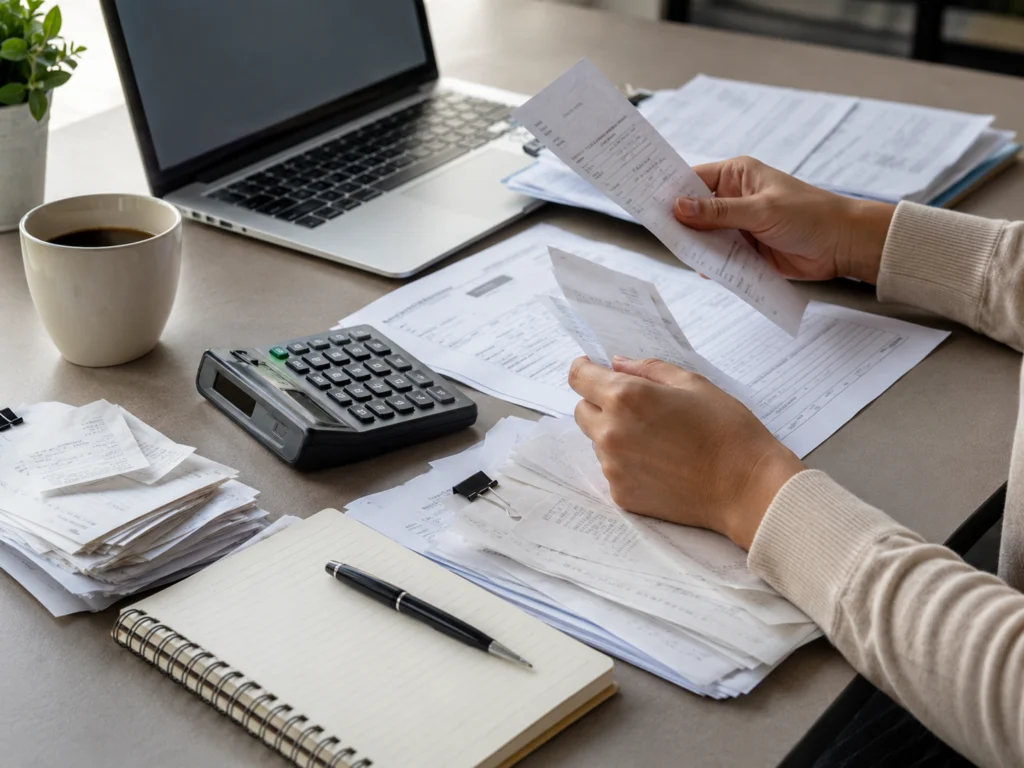
A bank feed helps, but it does not prove every deduction.
It may show that money was spent. However, it may not show what you bought. It may also miss the business purpose, GST details, or private-use split.
Because of this, keep records that explain each claim.
Useful records include receipts, tax invoices, logbooks, travel diaries, supplier contracts, appointment notes, and business-use calculations.
The ATO’s record-keeping rules for business say most business records need to be kept for five years.
If your records need work, HarvestWise also has a related guide on the Tax Records Checklist.
How to check sole trader tax deductions before lodging
Before lodging, review each claim with a simple test.
Start with the business purpose. Then check whether any part was private.
Next, confirm that you claimed only the business portion. After that, review the evidence.
Your records should support the amount, GST treatment, and business-use percentage.
These checks do not mean you should avoid valid claims. Instead, they help make your sole trader tax deductions accurate, supported, and easier to explain.
You may also find HarvestWise’s guide to myDeductions and tax-time records useful before lodging.
Need help with sole trader tax deductions?
Sole trader tax deductions can save money. However, they work best when your records are clear.
Your business-use percentages also need to make sense. GST and asset treatment should be checked before lodging.
HarvestWise Accounting can help you review your claims, spot risky errors, and prepare your tax return with more confidence.
If you are unsure about a claim, contact HarvestWise Accounting before you lodge.